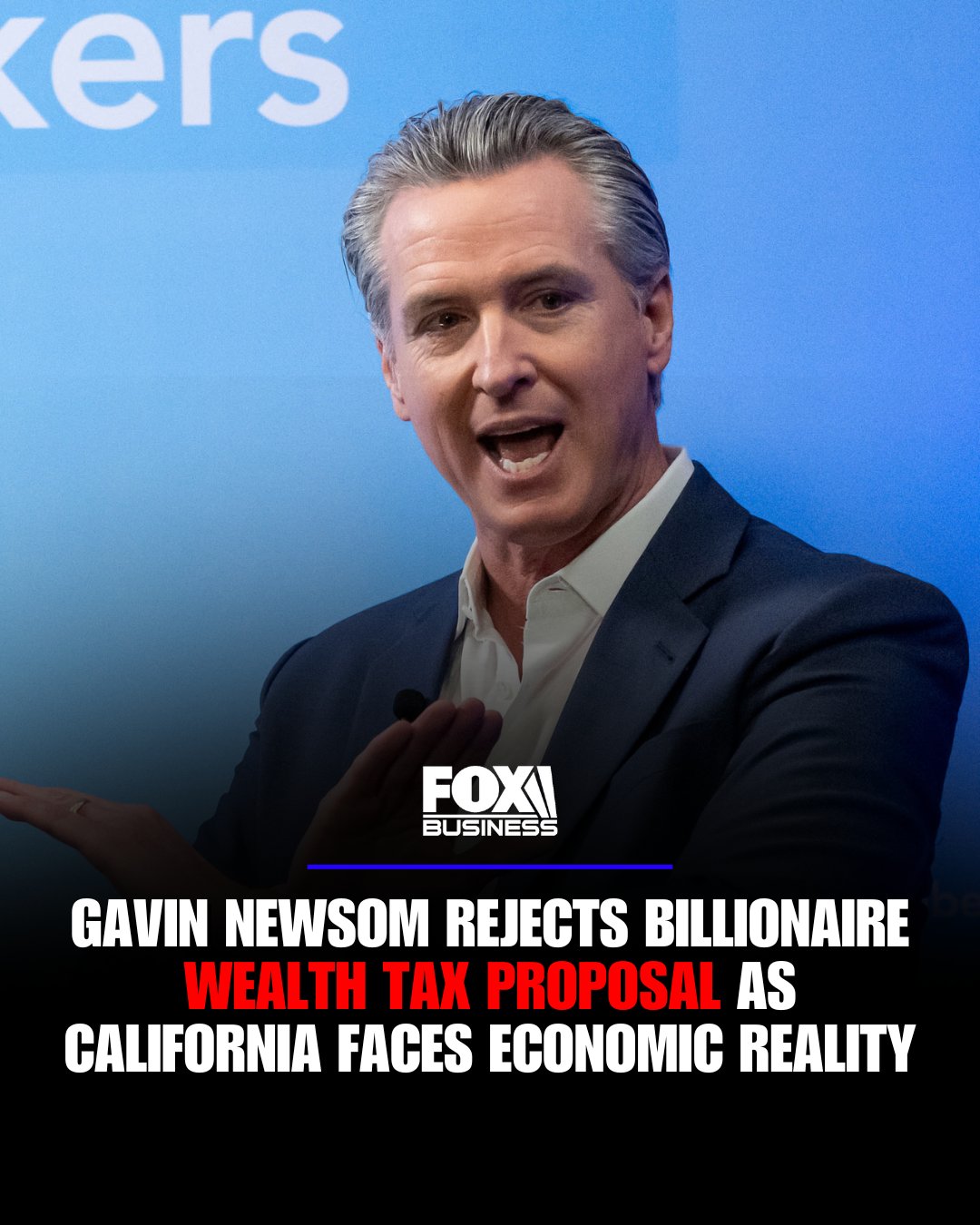
SACRAMENTO — In a striking departure from progressive orthodoxy, California Governor Gavin Newsom has publicly rejected a proposal to impose a one-time 5% tax on billionaires, warning that the measure would trigger capital flight and ultimately reduce funding for education, public safety, and social services .
The Democratic governor's opposition to the wealth tax—traditionally a cornerstone of progressive fiscal policy—reflects growing concern among state leaders about California's competitiveness as high-net-worth residents increasingly relocate to lower-tax jurisdictions.
Newsom's Warning: The Unintended Consequences
Speaking to reporters, Newsom laid out a cascade of negative effects should the billionaire tax proceed:
Direct Quote from Governor Newsom:
"The fact is, it actually will reduce investments in education. It will reduce investment in teachers and librarians, childcare. It will reduce investments in firefighting and police" .
The governor's economic analysis suggests that California's reliance on top earners for revenue is so pronounced that even a "one-time" extraction could prompt permanent relocation, eroding the state's long-term fiscal base.
The Structural Challenge
Newsom contextualized his opposition within broader federal policy impacts, specifically citing H.R. 1—the Republican tax reform package—as having "exacerbated" California's ongoing fiscal difficulties .
The Federal-State Tension:
H.R. 1's limitations on state and local tax (SALT) deductions have already increased the effective tax burden on high-income Californians. Adding a 5% wealth tax on top of federal and existing state levies would push combined tax rates to confiscatory levels, providing clear economic incentive for migration to Texas, Florida, Nevada, and other zero-income-tax states.
The Political Calculus
Newsom's position represents a calculated risk in a state where progressive taxation enjoys broad popular support:
Progressive Base Reaction:
Advocacy groups and labor unions have championed the billionaire tax as a mechanism to address wealth inequality and fund social programs. Newsom's opposition risks primary challenges and diminished enthusiasm among Democratic activists.
Moderate and Business Community Support: By defending taxpayer retention, Newsom aligns with Silicon Valley executives, venture capitalists, and entertainment industry leaders who have threatened departure. This coalition provides campaign financing and economic credibility.
National Ambitions: As a frequently mentioned potential presidential candidate, Newsom's rejection of punitive taxation signals moderation to general election voters—a positioning that distinguishes him from more doctrinaire progressives.
Economic Reality: The Numbers
California's fiscal dependence on top earners is extreme:
- Top 1% of taxpayers contribute approximately 50% of state income tax revenue
- Billionaire migration has accelerated since 2020, with Oracle, Tesla, and numerous tech executives relocating headquarters or personal residence
- Revenue volatility from capital gains dependence creates boom-bust budget cycles
A 5% one-time tax on estimated California billionaire wealth (approximately 500 billion) would theoretically generate 25 billion in immediate revenue. Newsom's analysis suggests the long-term cost of reduced capital formation, diminished philanthropy, and relocated taxpayers would exceed this windfall within 3-5 years.
The National Implications
California's wealth tax debate mirrors broader Democratic Party tensions:
Progressive Wing: Champions of Senators Elizabeth Warren and Bernie Sanders advocate systemic wealth taxation as mechanism for reducing inequality and funding universal programs.
Moderate/Pragmatic Wing:
Newsom joins governors and legislators concerned with revenue maximization and economic competitiveness, prioritizing sustainable funding over ideological purity.
The outcome in California—the nation's largest state economy—will influence policy development in New York, Illinois, and other high-tax jurisdictions considering similar measures.
What Happens Next
The billionaire wealth tax proposal faces uncertain legislative prospects:
Immediate Timeline:
Democratic supermajorities in both legislative chambers could override gubernatorial opposition, though such confrontation would be unprecedented and politically damaging.
Negotiated Compromise:
Lawmakers may modify the proposal to secure Newsom's signature—potentially reducing the rate, expanding the base, or incorporating sunset provisions.
Ballot Initiative:
Progressive advocates could bypass Sacramento entirely, placing the measure directly before voters in November 2026.
The Bottom Line
Governor Newsom has prioritized fiscal sustainability over progressive symbolism, recognizing that California's budget depends on retaining the very taxpayers targeted for extraction. The rejection of billionaire wealth taxation—previously considered untouchable Democratic policy—signals a pragmatic turn in state governance that may presage broader party realignment on tax policy.
Whether this represents genuine moderation or strategic positioning for national office remains to be seen. For California's budget, the immediate effect is stability; for progressive activists, it is betrayal.
Civic Watch Media will continue monitoring legislative developments as the 2026 session progresses.