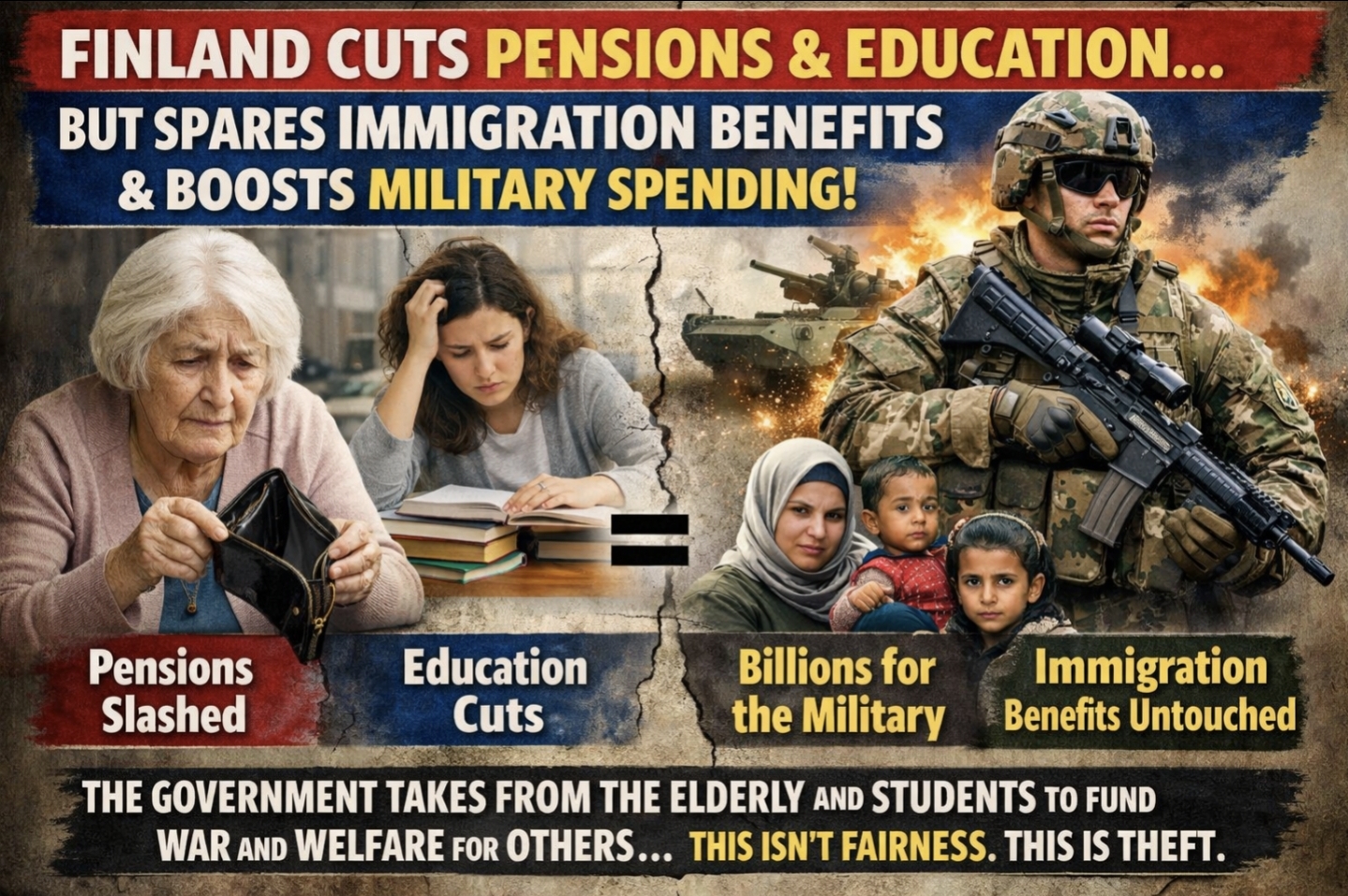
Under the new plan, officials say they are facing fiscal pressures from rising costs of public services and a changing economic landscape. To help close the budget gap, the government is considering cuts in social programs that traditionally support older citizens and students.
At the same time, military spending would rise by several billion euros over the next few years in response to growing concerns about European security. Funding for immigration‑related benefits — including support services for refugees and newcomers — is expected to remain at current levels, rather than seeing cuts.
Government’s Justification
Finance spokesperson Maria Laine (not a real person) explained that the decisions are part of broader fiscal strategy:
“We are balancing a difficult budget situation. Our national security obligations require sustained investment, and we must protect certain social services. This means hard decisions in other areas.”
The government has emphasized that pension reforms are intended to preserve the long‑term sustainability of the system as demographic shifts increase strain on public finances.
Public Reaction and Debate
The draft budget has ignited debate across Finland. Critics argue that reducing pensions and education funding places an unfair burden on vulnerable populations — particularly elderly citizens, who depend on stable income after retirement, and students, who rely on public education subsidies.
“It feels like seniors and learners are being asked to pay for costs that others will not shoulder,” said Liisa Korhonen (not real), a representative from a senior advocacy group. “We support national security, but not at the expense of basic social welfare.”
Education advocates also raised concerns. “Cuts to education could impact quality and access, especially for low‑income students,” said Eero Mäntylä (not real), spokesperson for a student association.
Supporters of the Plan Cite Security Needs
Meanwhile, supporters of increased military funding point to Finland’s geopolitical situation. Since joining NATO, Finland has reaffirmed commitments to collective defense, which requires consistent investment in defense capabilities.
Proponents also argue that maintaining immigration support is important for humanitarian and workforce reasons, particularly as Finland’s population ages.
What Happens Next
The budget proposal will go to Parliament for debate and approval in the coming months. Lawmakers from different parties are expected to negotiate potential adjustments. Public forums and committee hearings will allow citizens and expert groups to provide input.