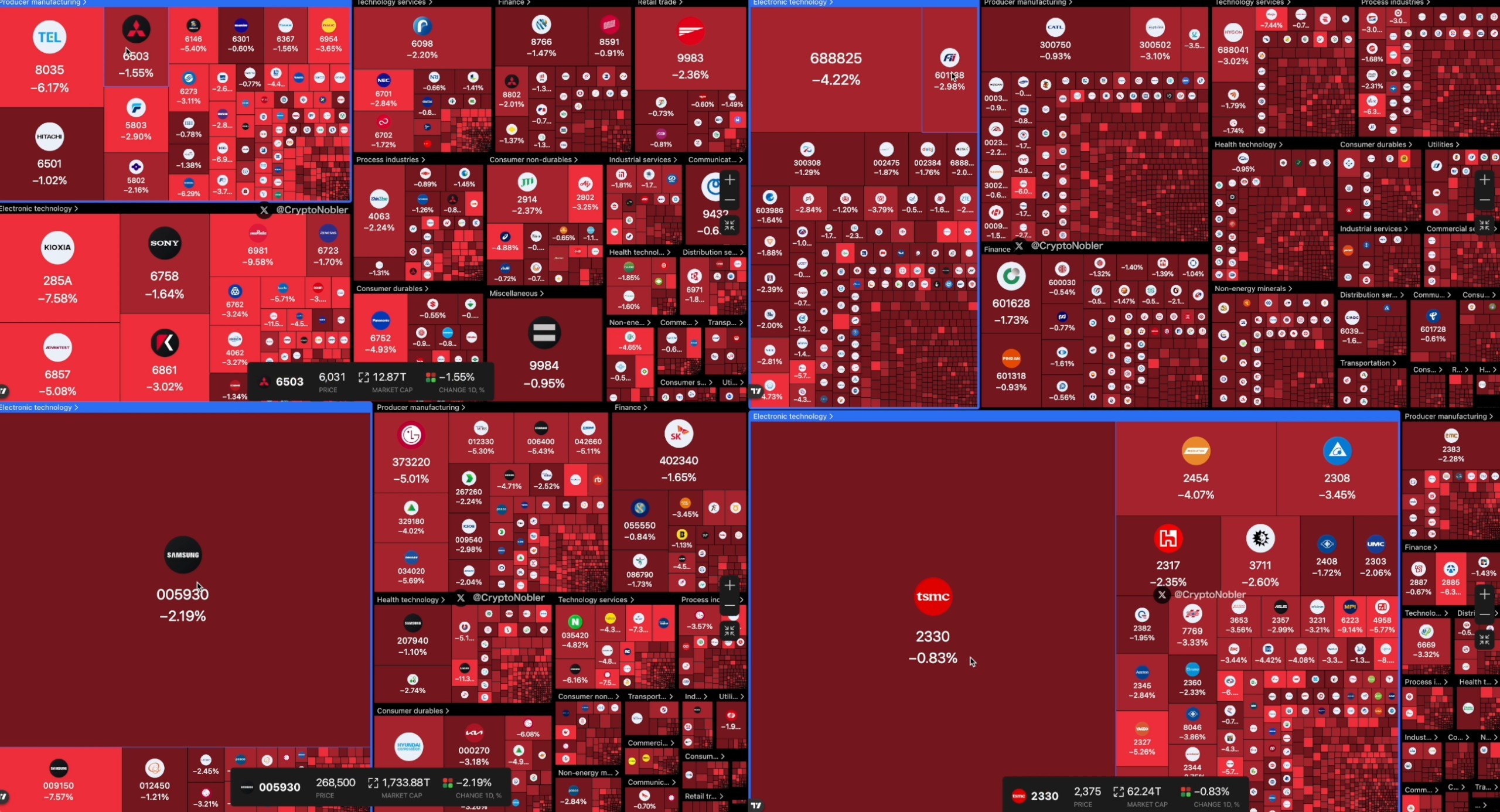
MUMBAI — Indian equity markets collapsed into the close on Friday, with benchmark indices suffering their worst single-day decline since the Iran-Hormuz crisis began. The Nifty 50 plummeted 320 points, while the Sensex cratered 1,000 points in a brutal session that saw the Bank Nifty lead the carnage with a staggering 1,200-point nosedive .
The bloodbath came as institutional investors rushed to price in the structural damage from a prolonged Strait of Hormuz closure, validating JPMorgan's recent warning to "short the market until Hormuz reopens" .
Sectoral Carnage
Banking & Financials: The Bank Nifty's 1,200-point collapse reflected mounting fears that rising energy costs will trigger a wave of corporate defaults and consumer loan delinquencies. With crude hovering above 104 per barrel, input cost inflation is squeezing margins across credit-intensive sectors .
Broader Market: The Nifty's 320-point decline was broad-based, with only select pockets showing resilience. Market breadth deteriorated sharply as foreign institutional investors continued their exodus from emerging market equities.
Large Caps: The Sensex's 1,000-point drop erased nearly ₹4 lakh crore in market capitalization, with index heavyweights in IT, FMCG, and metals bearing the brunt of risk-off sentiment.
The Green Islands: Defence & Railways Shine
Amid the sea of red, a curious divergence emerged. Savvy investors who had rotated into defence and railway stocks found their portfolios remarkably insulated—or even positive—despite the broader carnage .
Why These Sectors Held:
Sector Rationale
Defence Sustained government capex on indigenization; Hormuz crisis accelerating naval modernization orders
Railways Alternative freight transport demand surging as maritime costs explode; energy-efficient logistics gaining priority
The railway outperformance reflects a structural shift in India's logistics calculus. With maritime insurance premiums up 400% and container availability constrained, domestic rail freight is experiencing a renaissance as manufacturers seek reliable, cost-effective alternatives to sea-borne imports .
Defence stocks, meanwhile, are benefiting from the government's "Atmanirbhar Bharat" push, with the Hormuz crisis providing fresh urgency to reduce import dependence on foreign military hardware.
The HFT Factor
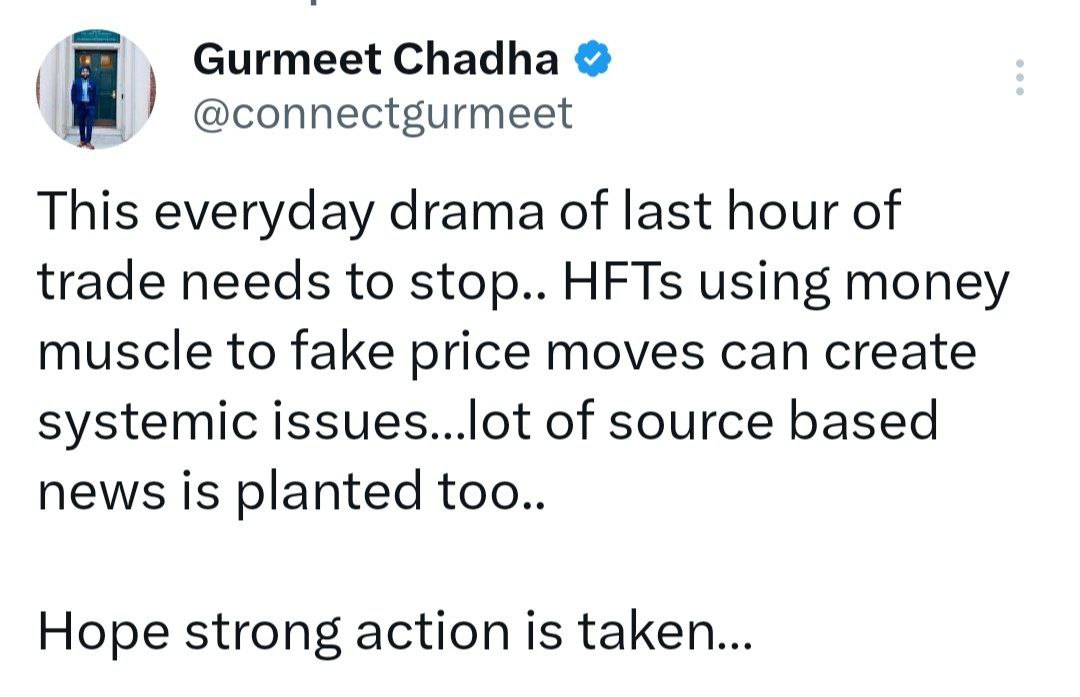
Market veteran Gurmeet Chadha highlighted a disturbing pattern exacerbating the volatility: "This everyday drama of last hour of trade needs to stop.. HFTs using money muscle to fake price moves can create systemic issues...lot of source based news is planted too" .
The observation raises serious questions about market integrity during crisis periods. As algorithmic trading systems detect momentum shifts, their collective response can amplify human panic into algorithmic avalanches—turning manageable corrections into systemic shocks.
Global Context
The Indian sell-off mirrored weakness across Asian markets as the implications of a prolonged Hormuz closure crystallized:
- Brent Crude: 104+ (40% surge since conflict began)
- Vessels Trapped: 2,000+ in Persian Gulf
- Daily Transits: Down 90% (4-5 vessels vs. normal 150)
- Stranded Seafarers: 20,000 in active war zone
With President Trump reportedly willing to end U.S. military operations even if Hormuz remains closed, the premium for energy security has reached unprecedented levels .
What Happens Monday
Traders will be watching several critical levels:
- Nifty Support: 22,500 (psychological) / 22,200 (200-DMA)
- Bank Nifty: Critical support at 47,000; failure opens path to 45,000
- FII Flows: Continued outflows would confirm structural bearishness
Key Catalysts:
- Weekend developments in Hormuz negotiations
- RBI intervention in currency markets (rupee volatility spiking)
- OPEC+ emergency meeting rumors
The Bottom Line
Friday's 1,000-point Sensex crash was not a panic attack—it was a rational repricing of risk in a world where 20% of global oil shipments face indefinite blockade. The investors who kept their portfolios green understood what JPMorgan articulated days earlier: in a Hormuz-constrained world, the only winning trade is the Hormuz Trade.
Until the strait reopens, expect continued volatility with sharp sectoral divergences. The railway and defence outperformance is not a fluke—it is a preview of the structural winners in a deglobalizing, energy-insecure world.
Civic Watch Media | Truth. Accountability. Public Interest.