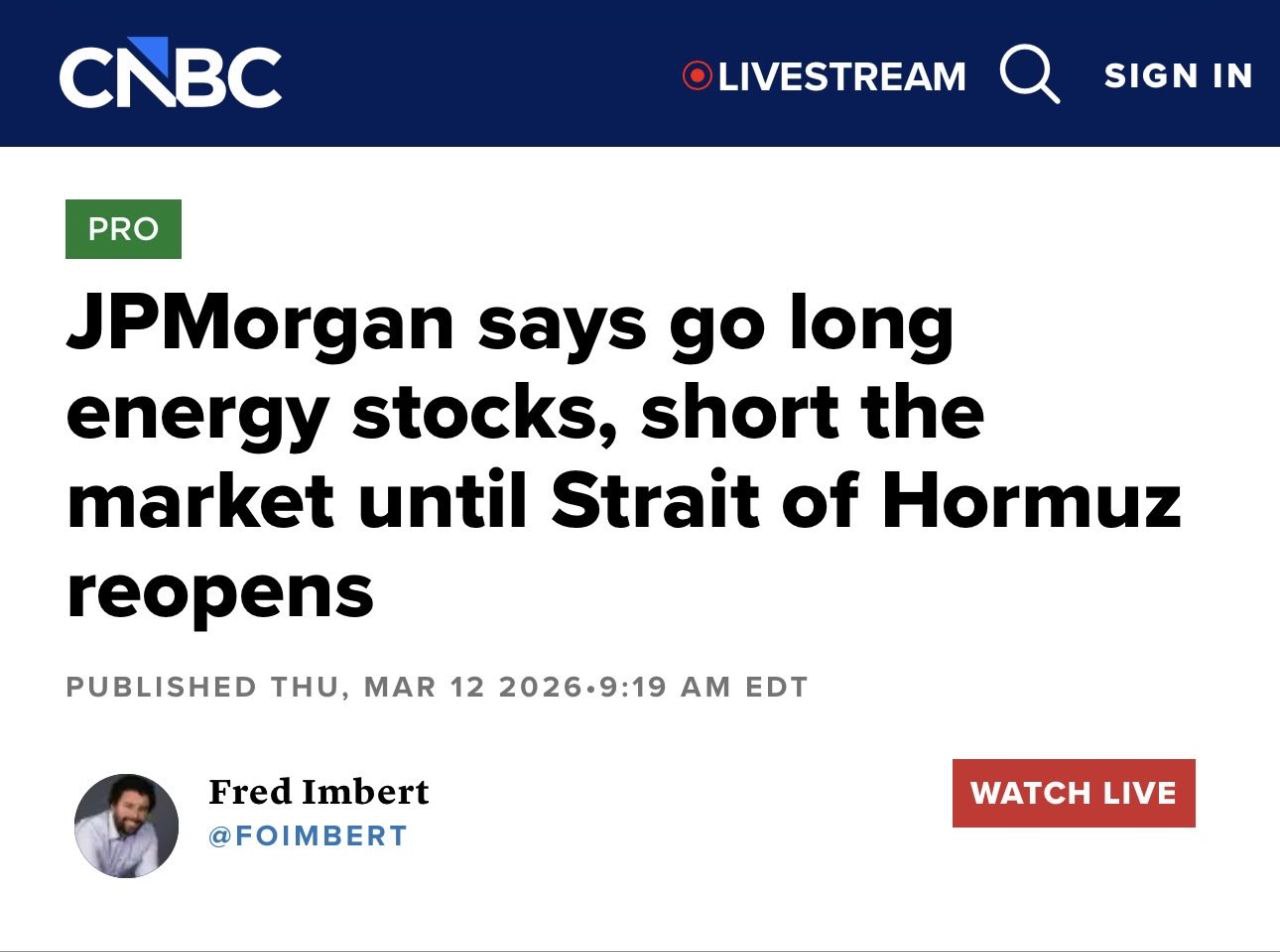
NEW YORK — In a stark reversal of conventional wisdom, JPMorgan Chase has issued an extraordinary tactical directive to investors: short the broader market while going long on energy stocks until the Strait of Hormuz reopens, according to a CNBC Pro report published March 12, 2026 .
The recommendation from America's largest bank represents one of the most bearish strategic calls on general equities since the crisis began, while simultaneously betting on continued energy sector outperformance as geopolitical tensions throttle global oil supplies.
The "Hormuz Trade"
JPMorgan's strategy—dubbed the "Hormuz Trade" by market participants—rests on a simple but devastating calculus:
Short Position Rationale:
- Supply Shock Inflation: With roughly 90% of normal Hormuz traffic eliminated and 400+ vessels queued for Iranian permission, energy costs are cascading through every sector of the global economy
- Margin Compression:
Transportation, manufacturing, and consumer discretionary sectors face severe earnings pressure as input costs surge
- Fed Dilemma: Central banks cannot cut rates to support growth without exacerbating energy-driven inflation, creating a stagflationary trap
Long Energy Rationale:
- Scarcity Premium: Brent crude has already surged 40%+ since hostilities began, trading above 104 per barrel
- Structural Supply Constraint: Even if military hostilities cease, Iran's institutionalized toll system (demanding yuan payments) ensures persistent friction in global oil flows
- Dollar Displacement: As Tehran successfully bypasses SWIFT with cryptocurrency and yuan settlements, traditional petrodollar dynamics are fracturing
Why This Matters Now
The timing of JPMorgan's call is particularly significant given breaking developments in Washington. Just hours ago, reports emerged that President Trump is willing to end the U.S. military campaign against Iran even if the Strait of Hormuz remains largely closed .
This strategic pivot by the White House validates JPMorgan's bearish thesis: if the world's dominant naval power accepts a closed Hormuz as the new normal, energy scarcity becomes a structural rather than cyclical feature of global markets.
Sector-by-Sector Impact
Winners (Long Positions):
- Integrated Oil Majors: ExxonMobil, Chevron, Shell benefiting from elevated crude prices and widening refining margins
- Oilfield Services: Schlumberger, Halliburton seeing increased capital expenditure as producers rush to develop non-Middle East reserves
- Alternative Energy: Solar, wind, and nuclear stocks gaining traction as "Hormuz hedges"
- Defense Contractors: Raytheon, Lockheed Martin supported by sustained military expenditure
Losers (Short Candidates):
- Airlines: Jet fuel costs consuming margins; IATA has already warned of "serious disruption" to global connectivity
- Shipping: Container lines facing 400% insurance premium increases and route disruptions
- Consumer Discretionary: Households facing 4+ gasoline prices reducing discretionary spending
- Emerging Markets: Oil-importing nations (India, Turkey, South Africa) facing currency crises and inflation spirals
The Yuan Wildcard
JPMorgan's strategy implicitly acknowledges a paradigm shift in global finance. Iran's successful implementation of a yuan-based toll system—with at least two vessels already completing payments in Chinese currency—represents the first major crack in the petrodollar system since its establishment in the 1970s .
As more nations negotiate independent access arrangements with Tehran, the dollar's exorbitant privilege in energy trade faces incremental erosion. This structural headwind to U.S. financial assets supports the "short market" component of JPMorgan's trade.
Risk Factors
The strategy is not without peril:
- Sudden Reopening: If diplomatic breakthroughs occur or military operations successfully secure Hormuz, energy positions could face violent reversal
- Demand Destruction: Prolonged high prices could trigger global recession, crushing energy demand and equity valuations simultaneously
- Policy Intervention: Strategic Petroleum Reserve releases or price controls could distort market signals
What Investors Should Watch
Immediate Catalysts:
- White House Confirmation: Official statement on Trump's reported willingness to accept closed Hormuz
- European Negotiations: Outcome of UK-led coalition talks with Iran
- Vessel Transit Data: Daily monitoring of Lloyd's List intelligence on queue lengths and toll payments
Structural Indicators:
- Yuan Settlement Volumes: Tracking adoption of Chinese currency in Hormuz transit fees
- Brent-WTI Spread: Widening spread signals increasing preference for non-Gulf crude
- Freight Rates: Baltic Dry Index and tanker rate movements indicating supply chain stress
The Bottom Line
JPMorgan's recommendation represents a vote of no confidence in near-term geopolitical resolution. By advising clients to short the broad market while overweighting energy, the bank is essentially betting that:
1. The Hormuz crisis persists for months, not weeks
2. Energy scarcity drives sectoral outperformance regardless of general economic conditions
3. Traditional diversification strategies fail in a stagflationary environment
With over 2,000 vessels trapped in the Persian Gulf and 20,000 seafarers stranded in an active war zone, the humanitarian and economic costs continue to mount . For investors, JPMorgan's message is clear: until the strait reopens, the only trade is the Hormuz Trade.
Civic Watch Media will continue monitoring market developments as this crisis evolves.
Civic Watch Media | Truth. Accountability. Public Interest.