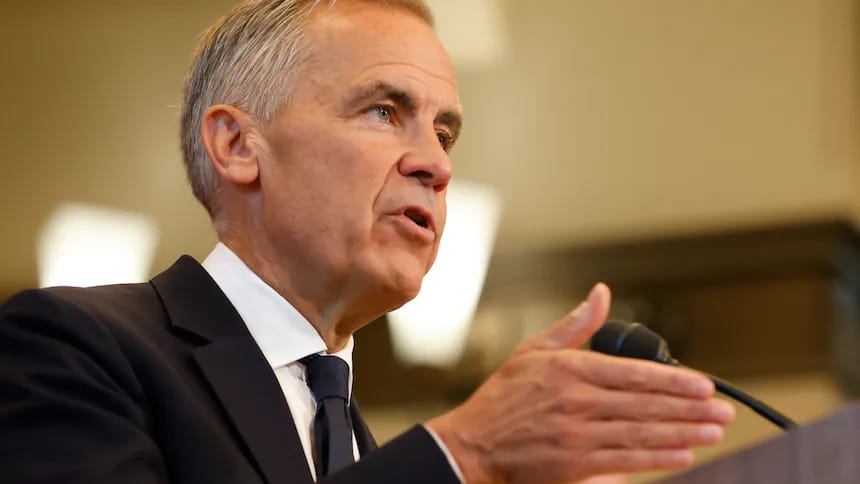
OTTAWA — Canadian Prime Minister Mark Carney says his government walked away from a proposed trade agreement with the United States after Washington introduced demands that Canada considered unacceptable, arguing that the U.S. was asking for too much while offering too little in return.
Carney made the remarks Saturday as tensions between the two North American neighbors escalated following the collapse of bilateral trade negotiations. Canadian negotiators were instructed to return home after talks failed to produce an agreement.
“We cannot accept what they’ve offered, and we will not give what they have asked,” Carney said.
He characterized the breakdown more bluntly, saying the United States had “asked too much and offered too little.”
Disagreements Over Autos, Culture and Sovereignty
According to Carney, the negotiations became increasingly difficult after the U.S. introduced late-stage demands involving automobile tariffs, Canadian cultural and language protections, and the country's ability to pursue trade agreements with other nations.
Canada viewed some of the proposals as going beyond ordinary trade negotiations and touching on national sovereignty. Carney said Ottawa had entered the discussions seeking a mutually beneficial partnership, but would not accept an agreement that compromised Canada's interests.
The prime minister also warned that Canada had learned to be cautious about the durability of American commitments, saying that sometimes the U.S. signature on agreements “was written in pencil.”
Tariffs Escalate the Dispute
The collapse of the negotiations has already produced economic consequences. The United States imposed 50% tariffs on roughly $20 billion worth of Canadian goods, while Canada announced plans for dollar-for-dollar retaliatory tariffs beginning September 8.
The measures are expected to affect a range of industries and products, adding pressure to businesses and consumers on both sides of the border.
U.S. officials, meanwhile, have defended Washington's position, arguing that the proposed terms would have provided Canada with improved access and tariff relief while addressing longstanding American concerns.
A New Chapter in U.S.-Canada Relations
The dispute marks a significant deterioration in a relationship that has traditionally been defined by extensive economic integration and close cooperation.
Carney said Canada remains open to a mutually beneficial agreement but insisted that any future deal must respect Canadian sovereignty and protect Canadian workers and businesses.
“We are masters in our own home and the partner of choice abroad,” Carney said in remarks outlining Canada's position.
For now, however, the two governments appear headed for a period of heightened trade tensions, with businesses and consumers watching closely to see whether negotiations can eventually resume.
Civic Watch Media will continue to monitor developments in the Canada-U.S. trade dispute and its impact on the North American economy.