TOKYO/WASHINGTON — Financial markets are entering a period of heightened uncertainty as renewed pressure on the Japanese yen, rising Japanese bond yields and a broader global sell-off in government debt put Japan’s enormous U.S. Treasury holdings under renewed scrutiny.
A viral market alert circulating online claims that the Bank of Japan will sell more than ¥1 trillion in U.S. Treasury securities at 7:50 p.m. Eastern Time, in an attempt to support the yen and prevent further deterioration in financial markets.
Civic Watch Media has not independently verified that specific scheduled sale or the reported 7:50 p.m. timing. No credible official confirmation establishing such a transaction was identified in the latest available reporting.
What is confirmed, however, is that Japan remains the world's largest foreign holder of U.S. Treasury securities and that its management of those assets has become increasingly important to global investors.
Japan Remains a Major Holder of U.S. Debt
According to the latest data from the U.S. Treasury Department, Japan held approximately $1.117 trillion in U.S. Treasury securities at the end of June 2026, down from about $1.143 trillion a month earlier. Japan nevertheless remained the largest foreign holder of U.S. government debt.
That enormous portfolio means any significant shift in Japanese demand for U.S. government bonds can attract close attention across global financial markets.
A large-scale Treasury sale could theoretically place upward pressure on U.S. bond yields if it materially increased the supply of securities being absorbed by the market. Higher Treasury yields can, in turn, increase borrowing costs and place additional pressure on equity valuations, particularly growth and technology stocks.
But the size and timing of any potential Japanese sale remain critical. A headline claiming that Japan is preparing to dump ¥1 trillion does not by itself establish that such a transaction will occur, nor does it mean that the entire amount would necessarily be sold in one market operation.
Why the Yen Is at the Centre of the Story
Japan has been under increasing pressure to prevent excessive weakness in the yen.
Tokyo and Washington recently participated in a rare coordinated intervention designed to support Japan's currency. The intervention helped the yen strengthen temporarily, but the currency has remained vulnerable because of the significant interest-rate gap between Japan and the United States.
The situation has created a difficult policy balancing act.
Japan wants to support the yen without destabilising its domestic bond market or triggering excessive disruption in the U.S. Treasury market.
Recent analysis has also highlighted an alternative mechanism through which Japan can obtain dollars for currency intervention without necessarily selling Treasuries outright. The Federal Reserve's FIMA repo facility can allow foreign monetary authorities to pledge U.S. Treasury securities as collateral in exchange for dollars, reducing the need for immediate outright Treasury sales.
Global Bond Markets Already Under Pressure
The speculation arrives at a particularly sensitive moment for global fixed-income markets.
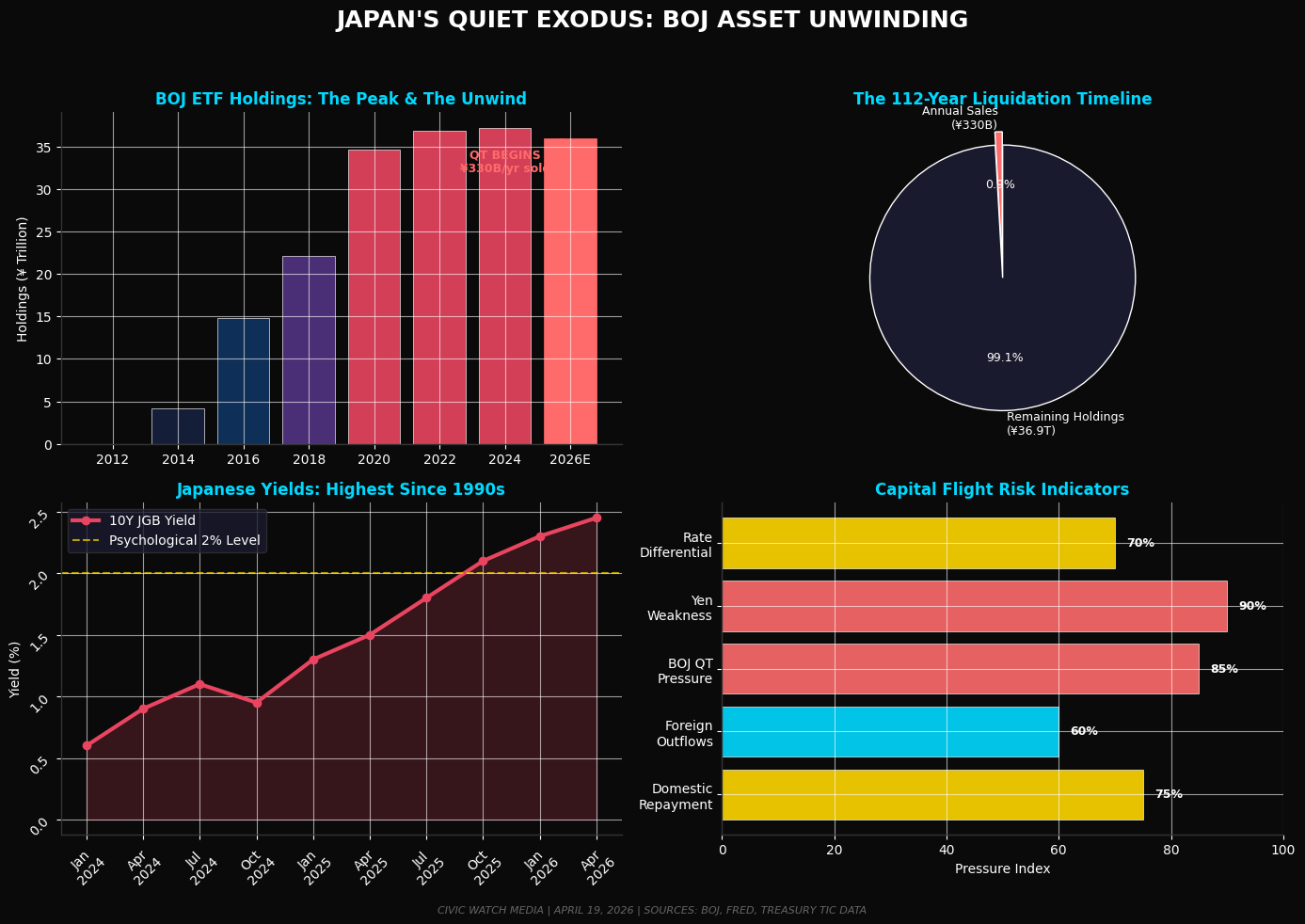
U.S. 30-year Treasury yields have climbed to levels not seen since 2007, while Japan's 10-year government bond yield has also reached its highest level in decades. Investors are increasingly concerned about government debt, inflation, rising energy prices and geopolitical uncertainty.
The combination has created a challenging environment for both bond and equity investors.
If major foreign holders were to substantially reduce their exposure to U.S. Treasuries, markets could interpret such a move as another signal that demand for U.S. government debt is changing.
However, a single ¥1 trillion transaction would represent only a fraction of Japan's total Treasury portfolio and should not automatically be interpreted as an imminent collapse of the U.S. bond market.
What Investors Are Watching
Markets will be closely monitoring several developments:
- The Japanese yen: Further weakness could increase pressure on Tokyo to intervene.
- U.S. Treasury yields: A sustained rise could increase borrowing costs throughout the global financial system.
- Japanese government bonds: Higher domestic yields could encourage Japanese investors to shift more capital toward domestic assets.
- U.S. equities: Higher bond yields can put additional pressure on stock valuations.
- Oil prices and geopolitics: Higher energy costs could reinforce inflation concerns and complicate monetary policy decisions.
Japan's domestic bond market is also undergoing a major adjustment as the Bank of Japan moves away from years of ultra-loose monetary policy. Reuters reports that Japanese government bond yields have risen sharply amid expectations of further policy tightening and concerns surrounding government finances.
No Confirmation of a Market "Crash"
Despite the dramatic language accompanying the viral claim, there is currently no confirmed evidence that Japan is preparing a ¥1 trillion Treasury dump at 7:50 p.m. ET, nor that such an action would automatically trigger a U.S. stock-market crash.
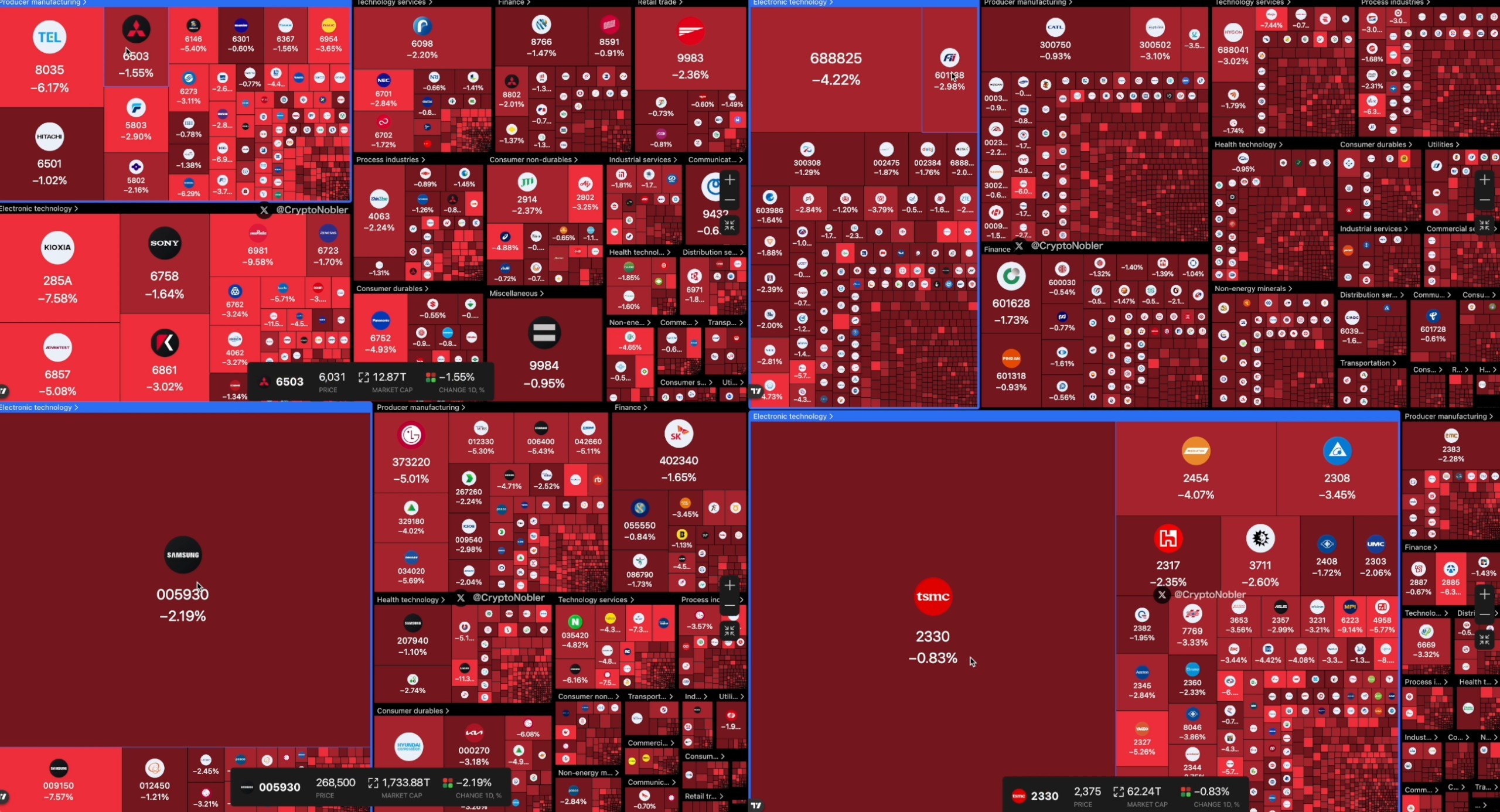
What can be confirmed is that global financial markets are already experiencing significant volatility, with investors increasingly sensitive to movements in currencies, government bonds, oil prices and interest-rate expectations.
The potential for Japan to alter its foreign-asset strategy is therefore a story worth watching — but the distinction between confirmed policy action and market speculation remains critical.
Civic Watch Media Market Watch
The next major signal will come from Tokyo's official communications, foreign-exchange activity and movements in U.S. Treasury yields.
If Japanese authorities announce a significant intervention or Treasury transaction, the implications could extend well beyond Japan, affecting the dollar, U.S. government bonds, global equities and potentially emerging-market currencies.
Civic Watch Media will continue monitoring the situation and provide verified updates as new information emerges.
Disclaimer: This report is for news and informational purposes only and does not constitute investment or financial advice.