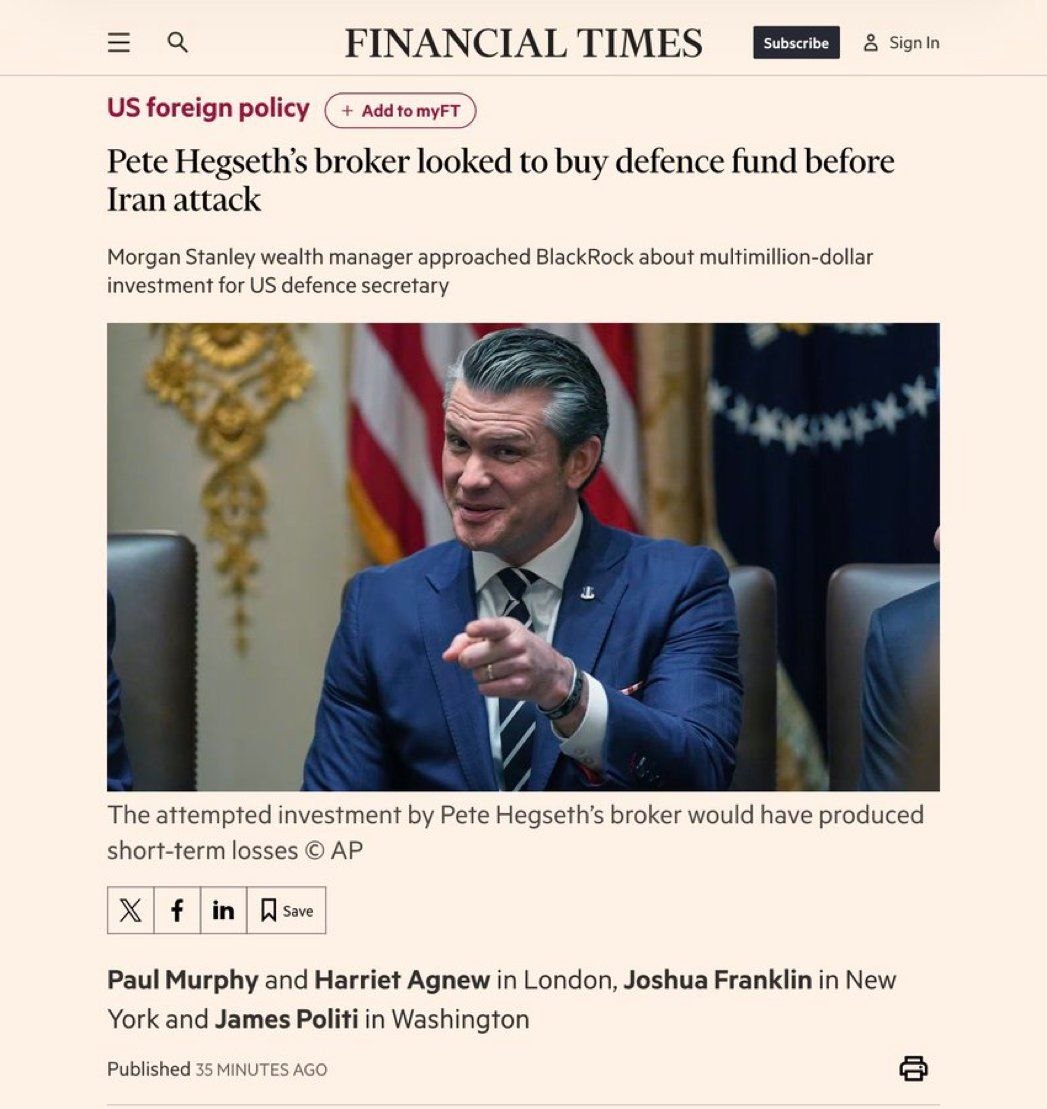
Fresh controversy is emerging in the United States following reports that senior officials and politically connected figures made large financial moves tied to defense spending shortly after the outbreak of war, raising questions about ethics, transparency, and potential conflicts of interest.
According to market observers and political commentators, a senior U.S. defense official reportedly purchased millions of dollars’ worth of a Defense Exchange-Traded Fund (ETF) shortly after hostilities began. However, the investment reportedly declined sharply as markets reacted with panic, leading to significant financial losses.
The situation has fueled debate about whether government officials should be allowed to trade securities linked to sectors directly affected by their policy decisions — particularly during wartime, when defense spending and market volatility can shift rapidly.
Scrutiny Intensifies Over Defense Contract Award
Adding to the controversy, reports indicate that the son of Donald Trump recently secured a defense-related contract valued at approximately $620 million from the U.S. Department of Defense.
While government procurement rules allow private companies to compete for contracts, critics argue that deals involving politically connected individuals can create perceptions of favoritism or undue influence, even when formal procedures are followed.
Transparency advocates and ethics watchdog groups have called for increased disclosure requirements and stricter oversight to ensure that government decisions remain free from personal or political financial gain.
Growing Concerns About Insider Trading and Governance
The developments have reignited long-standing concerns in the United States about insider trading and financial ethics among public officials. Although insider trading laws exist and enforcement agencies actively investigate violations, critics say the current system still leaves room for potential conflicts of interest.
Key concerns raised by analysts include:
- Officials trading stocks or funds tied to sectors they regulate
- Timing of investments during major geopolitical events
- Perceived links between political influence and government contracts
- Public trust in financial and political institutions
Financial markets have historically reacted sharply during wartime, with defense-related assets often experiencing volatile swings driven by uncertainty, policy decisions, and investor sentiment.
Calls for Investigation and Reform
Lawmakers from both major political parties, along with public accountability groups, have periodically proposed legislation to restrict or ban stock trading by senior government officials and their immediate family members. Supporters argue that such measures would strengthen public confidence and reduce the risk of perceived corruption.
For now, the situation remains under public scrutiny, with observers closely watching whether regulators or congressional committees will launch formal investigations into the reported transactions and contract awards.
Bottom Line
The controversy highlights a broader issue facing modern governments: balancing national security decision-making with financial transparency and ethical accountability. As military spending rises and geopolitical tensions persist, calls for stricter oversight of financial activities linked to defense policy are likely to grow.