🚨 BREAKING: Trump Warns 'Whole Civilization Will Die Tonight' as Iran-Israel War Reaches Critical Flashpoint
The Ultimatum
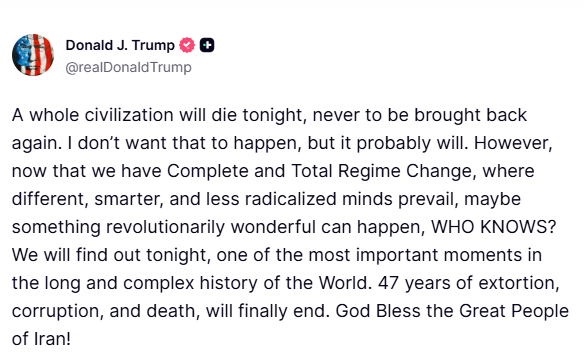
President Donald Trump issued one of the most alarming warnings of his presidency on Tuesday, April 7, 2026, declaring that "a whole civilization will die tonight, never to be brought back again" if Iran fails to meet his deadline to agree to a deal ending the war and reopening the Strait of Hormuz .
The stark warning, posted on Trump's Truth Social platform, came just hours before an 8 p.m. Eastern Time deadline for Tehran to comply with U.S. demands or face catastrophic consequences .
"A whole civilization will die tonight, never to be brought back again. I don't want that to happen, but it probably will," Trump wrote .
The Context: Five Weeks of War
The Iran-Israel conflict, now in its fifth week, has escalated dramatically since February 28, 2026. What began as regional tensions has spiraled into a full-scale war involving:
• U.S. and Israeli airstrikes on Iranian military targets, infrastructure, and leadership
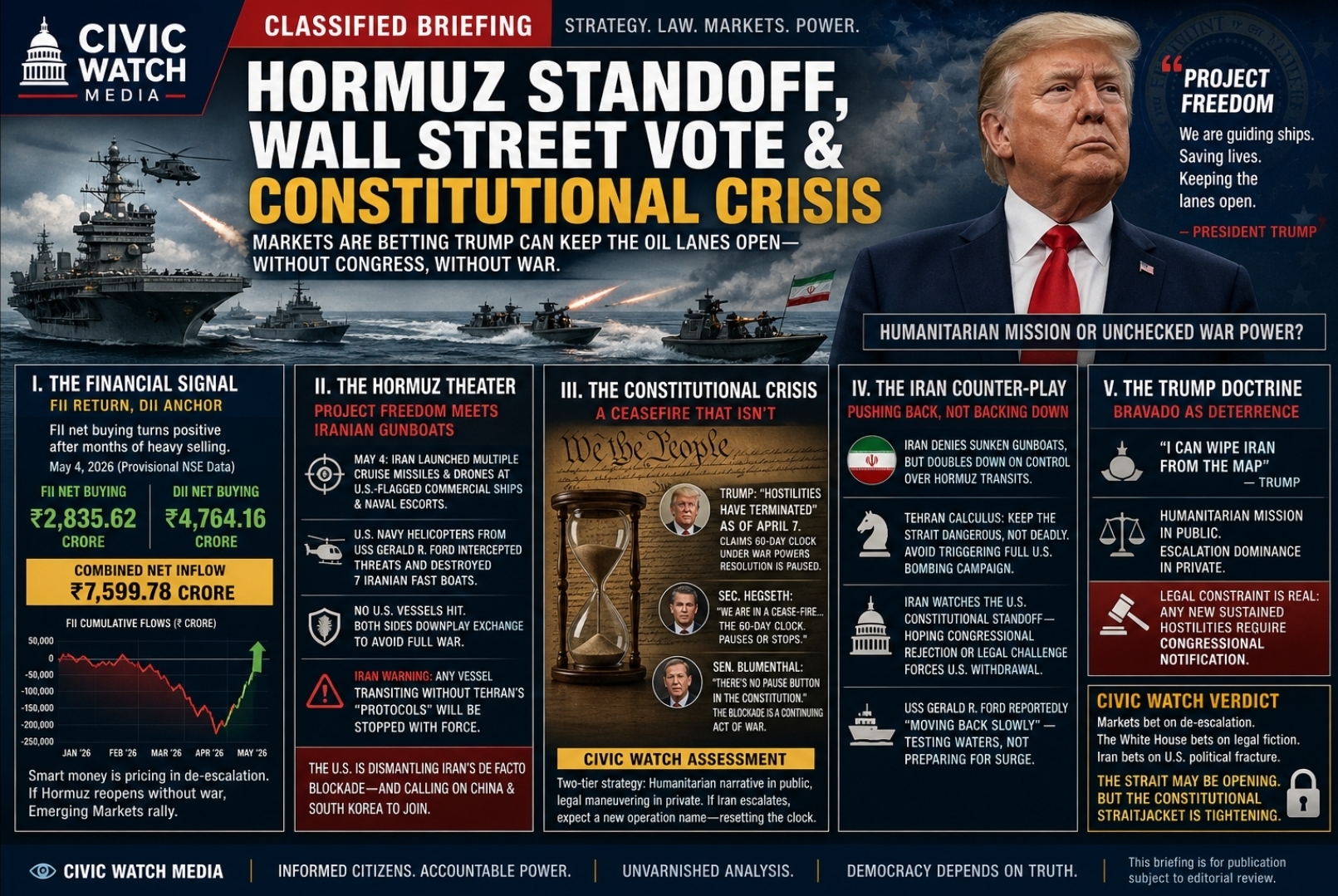
• Iran's blockade of the Strait of Hormuz, a vital waterway through which one-fifth of the world's oil transits
• Retaliatory strikes by Iran on Israel and Saudi Arabia
• The killing of Iran's top leadership,
including Supreme Leader Ayatollah Ali Khamenei, which Trump referenced as "Complete and Total Regime Change"
Trump's Threats: Infrastructure as a Weapon
Trump has made explicit threats to destroy Iran's civilian infrastructure if his demands are not met:
• Every bridge in Iran would be "decimated by 12 o'clock tomorrow night"
• Every power plant would be "out of business, burning, exploding and never to be used again"
• The country would be bombed back to the "Stone Age"
International law experts have warned that such attacks on civilian infrastructure could constitute war crimes under the Fourth Geneva Convention . UN Secretary-General Antonio Guterres expressed being "alarmed by the rhetoric" in Trump's social media posts .
Iran's Defiance and Preparation
Rather than capitulating, Iran has doubled down on its position:
• 14 million Iranians, including President Masoud Pezeshkian, have reportedly volunteered to sacrifice their lives in the war
• Human chains of young people, athletes, artists, and students have formed around power plants to protect them from strikes
• The Revolutionary Guard warned that Iran would "deprive the U.S. and its allies of the region's oil and gas for years" and expand attacks across the Gulf if Trump follows through
• Iran has rejected the latest ceasefire proposal, insisting on a full end to the war rather than a temporary truce
Military Actions Underway
Even as the deadline approached, military operations intensified:
• U.S. strikes hit Kharg Island, Iran's crucial oil hub, targeting dozens of military targets
• Airstrikes damaged bridges and railway infrastructure in Qom, Kashan, and northern Iran
• Israel warned Iranians to avoid trains and railway lines until 9 p.m. Tehran time, signaling imminent strikes on transportation infrastructure
• Explosions rocked Tehran as the deadline neared
Global Consequences
The crisis has sent shockwaves through the world economy and international community:
• Oil prices have surged to record highs, with WTI crude touching $116 per barrel and crude oil futures hitting ₹10,888/barrel in India
• U.S. gas prices have climbed to $4.13 per gallon nationally, up 89 cents in one month
• India issued urgent advisories for its citizens in Iran to "stay wherever you are" and avoid military installations, power infrastructure, and upper floors of buildings
• Saudi Arabia and Bahrain temporarily closed the King Fahd Causeway, the only road connection between the two nations, over Iranian attack threats
• Western firms in Riyadh extended work-from-home advisories
Diplomatic Efforts
Despite the bellicose rhetoric, backchannel negotiations continue:
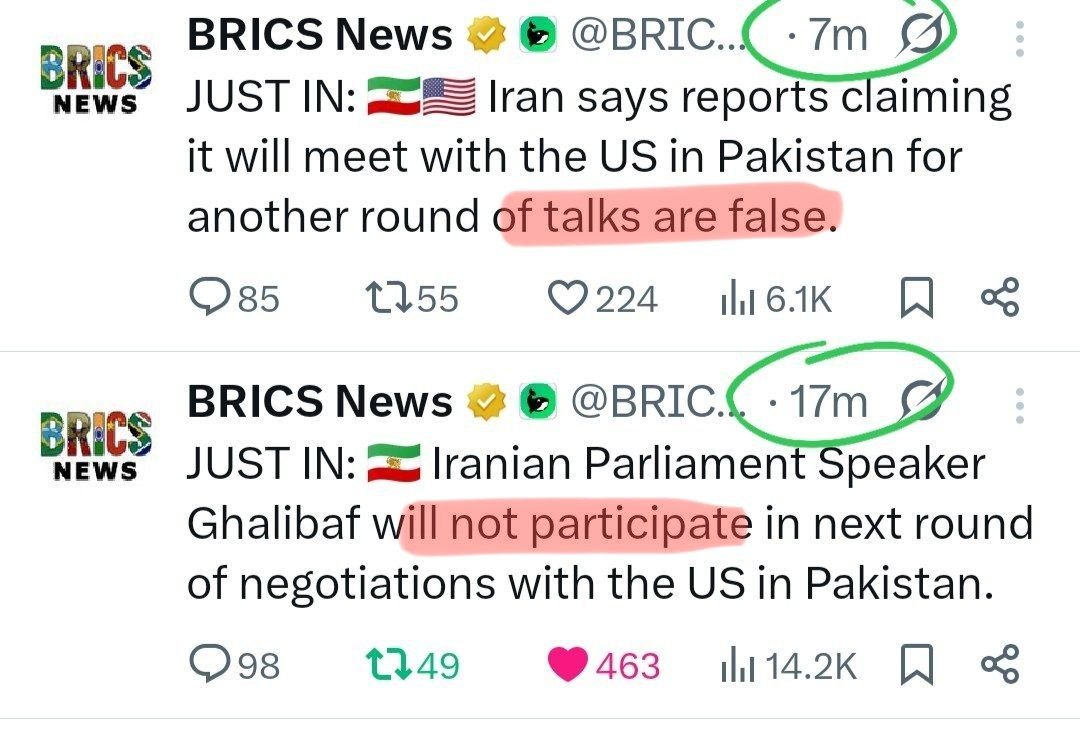
• Pakistan is serving as an intermediary, with Islamabad's efforts described as approaching a "critical, sensitive" stage
• Qatar has conveyed messages between Washington and Tehran
• The UN Security Council scheduled a vote on a resolution to address the Strait of Hormuz crisis
• Vice President JD Vance indicated hope for negotiations while warning the U.S. has "tools in our toolkit that we so far haven't decided to use"
The Mood in Tehran
For ordinary Iranians, the situation is increasingly desperate. One young teacher, speaking anonymously to the Associated Press, captured the prevailing sentiment:
"If we don't have the internet, and if we don't have electricity, water, and gas, we're really going back to the Stone Age, as Trump said."
Many who once hoped U.S. attacks might topple the Islamic Republic now fear the war will bring only chaos and destruction .
What Happens Next?
As the 8 p.m. deadline passes, the world watches with bated breath. Trump has framed this as "one of the most important moments in the long and complex history of the World" , suggesting that 47 years of "extortion, corruption, and death" could finally end .
Yet with Iran rejecting the latest proposal and both sides trading increasingly dire threats, the path to de-escalation remains uncertain. The president has oscillated between extending deadlines and promising "hell will reign down," leaving allies and adversaries alike uncertain of his next move .