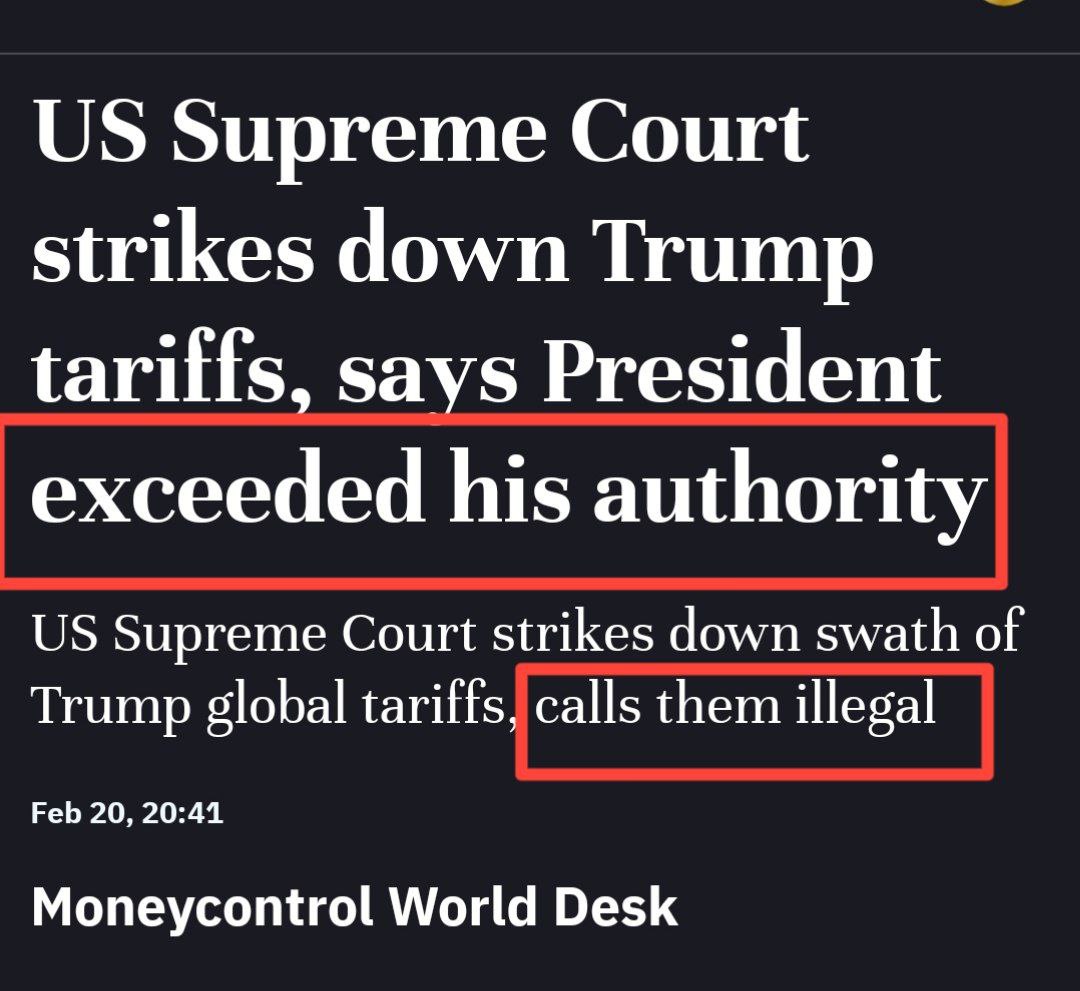
WASHINGTON — In a landmark ruling that strikes at the heart of presidential trade authority, the United States Supreme Court has declared President Donald Trump's global tariffs illegal, finding in a 6-3 decision that the President exceeded his constitutional authority in imposing sweeping duties on imports .
The ruling, handed down February 20, 2026, sends shockwaves through global markets and opens the floodgates for potentially 150+ billion in tariff refunds to impacted businesses and trading partners.
The Decision: Presidential Overreach
The Court's majority opinion found that Trump's use of Section 232 and Section 301 trade authorities—previously deployed to impose tariffs on steel, aluminum, and billions in Chinese goods—violated the constitutional separation of powers .
Key Holdings and Implications:
The President exceeded constitutional authority, which limits future unilateral trade actions. The tariffs were declared illegal ab initio, meaning refunds are likely mandated from the date of imposition. Congressional authorization is now required for such trade measures, returning trade policy to the legislative branch.
The 6-3 split suggests the decision was not along predictable ideological lines, with at least one conservative justice joining the majority to check executive overreach.
The 150 Billion Refund Tsunami
The immediate consequence: a fiscal earthquake. The U.S. Treasury now faces potential liability exceeding 150 billion in tariff refunds to American importers who paid duties on steel and aluminum, Chinese exporters and their U.S. trading partners hit by Section 301 tariffs, and retaliatory tariff relief for allies caught in crossfire including the EU, Canada, Mexico, and Japan.
The refund process could take years, creating administrative chaos at Customs and Border Protection and the Commerce Department.
Global Market Reaction
Immediate Winners include U.S. importers such as retailers, manufacturers, and automakers who see cost relief. Agricultural exporters benefit as farmers regain access to Chinese markets with retaliatory tariffs likely to unwind. Global supply chains experience reduced friction in cross-border trade flows.
Immediate Losers include domestic steel and aluminum producers who lose protective pricing and face import competition. The Treasury Department faces massive unbudgeted outflows. The Trump Administration suffers a major policy rebuke ahead of potential re-election campaign.
Constitutional Precedent
The ruling fundamentally restructures American trade policy architecture. For decades, presidents of both parties have used delegated authority to negotiate trade agreements and impose sanctions. The Court's decision appears to require explicit congressional authorization for major tariff initiatives.
Legal scholars note this could hamstring future administrations—Democratic or Republican—in responding to trade emergencies or using commercial leverage for geopolitical objectives.
Political Fallout
The timing is explosive. With the 2026 midterm elections approaching and speculation about Trump's political future intensifying, the Supreme Court has delivered a judicial rebuke that undermines a signature policy achievement.
The President's team is likely to frame the decision as "judicial activism" and may press Congress for retroactive authorization—though Democratic control of at least one chamber makes this politically improbable.
What Happens Next
Immediate Timeline (Days):
The Treasury Department halts tariff collection. Customs begins processing refund claims. Trading partners demand bilateral negotiations on compensation.
Short-term Timeline (Weeks):
Congress debates Trade Promotion Authority reform. WTO disputes initiated by China and others are likely suspended. Market volatility occurs as sectors reprice on the new competitive landscape.
Long-term Timeline (Months):
Legislative framework for future tariffs is required. Potential constitutional amendment debate on trade powers emerges. Restructuring of the U.S.-China commercial relationship continues.
The Bottom Line
The Supreme Court has drawn a bright line on presidential power, declaring that trade policy cannot be conducted by executive fiat. The 150+ billion refund liability is the price of constitutional correction—but the larger cost may be American leverage in ongoing geopolitical negotiations, from Hormuz to Beijing.
For businesses that paid billions in duties, relief is coming. For the Trump administration, the ruling represents a judicial check on executive ambition that will reshape the balance of power in Washington for decades.
Civic Watch Media will continue monitoring implementation of this landmark ruling.