China’s AI Stocks Face Fresh Shock as Investors Question Sky-High Valuations
Civic Watch Media | Breaking Markets Report
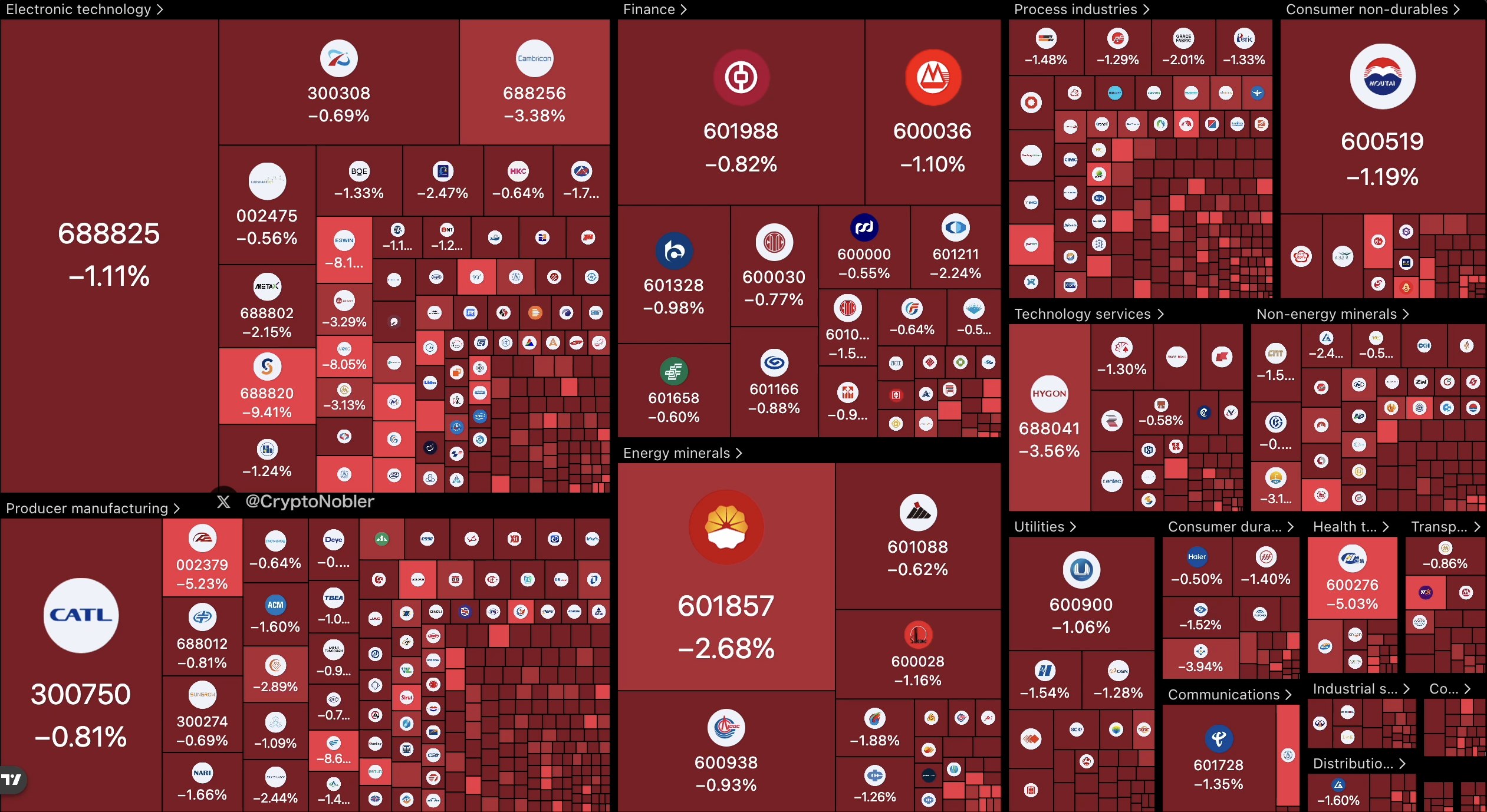
China’s technology sector is facing renewed market pressure as investors reassess the extraordinary valuations attached to artificial-intelligence companies, raising concerns that the country’s AI investment boom could be entering a more volatile phase.
Claims circulating online suggest that more than ¥450 billion in market value was erased from Chinese AI-related stocks within roughly 20 minutes. Civic Watch Media has not independently verified that exact figure or the 20-minute timeframe, so it should be treated as an unconfirmed market claim rather than an established fact.
The concern, however, comes against a backdrop of exceptionally elevated valuations. Recent market analysis found that China’s technology-focused STAR 50 index had traded at a price-to-earnings ratio above 150, compared with roughly 35 for the Nasdaq 100, highlighting the premium investors have been placing on Chinese technology companies.
Treasury Selling Adds Another Layer
At the same time, China has continued reducing its reported holdings of U.S. Treasury securities. U.S. Treasury data showed that Chinese holdings fell 4% in June to $633.4 billion, the lowest level since September 2008 and more than 13% below the level a year earlier.
However, there is no verified evidence that China is selling Treasuries specifically to prevent a collapse in Chinese AI stocks. Treasury sales can reflect a wide range of factors, including reserve management, currency policy, diversification and broader financial conditions.
The distinction matters: a simultaneous decline in Chinese Treasury holdings and weakness in AI shares does not by itself establish a direct cause-and-effect relationship.
Why Investors Are Watching Closely
The latest developments highlight the growing tension surrounding China’s AI boom. Strong government backing, retail-investor enthusiasm and expectations of rapid technological growth have pushed valuations sharply higher, while questions remain about whether earnings and real-world AI adoption can eventually justify those prices.
China’s technology market has already demonstrated how quickly sentiment can change. A sharp reversal in heavily valued AI names could spread beyond individual companies, potentially affecting broader Chinese equities and investor confidence.
For global markets, the bigger question is whether any Chinese technology correction remains contained or becomes part of a wider risk-off move involving Asian equities, currencies and U.S. government debt.
Civic Watch Media will continue monitoring the market for confirmed exchange data and official statements before treating the reported ¥450 billion loss as verified.
This report is for news and informational purposes and should not be interpreted as financial advice.