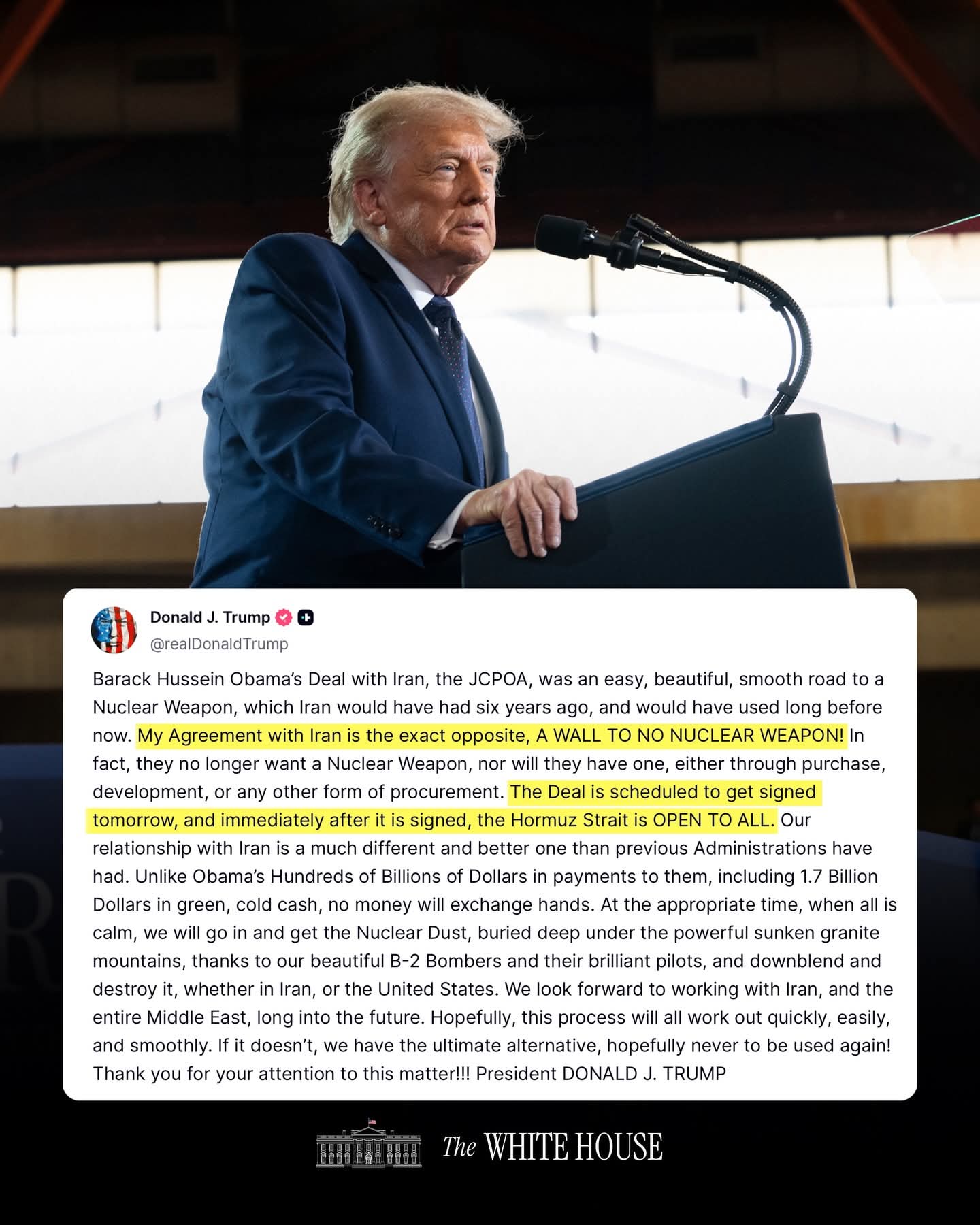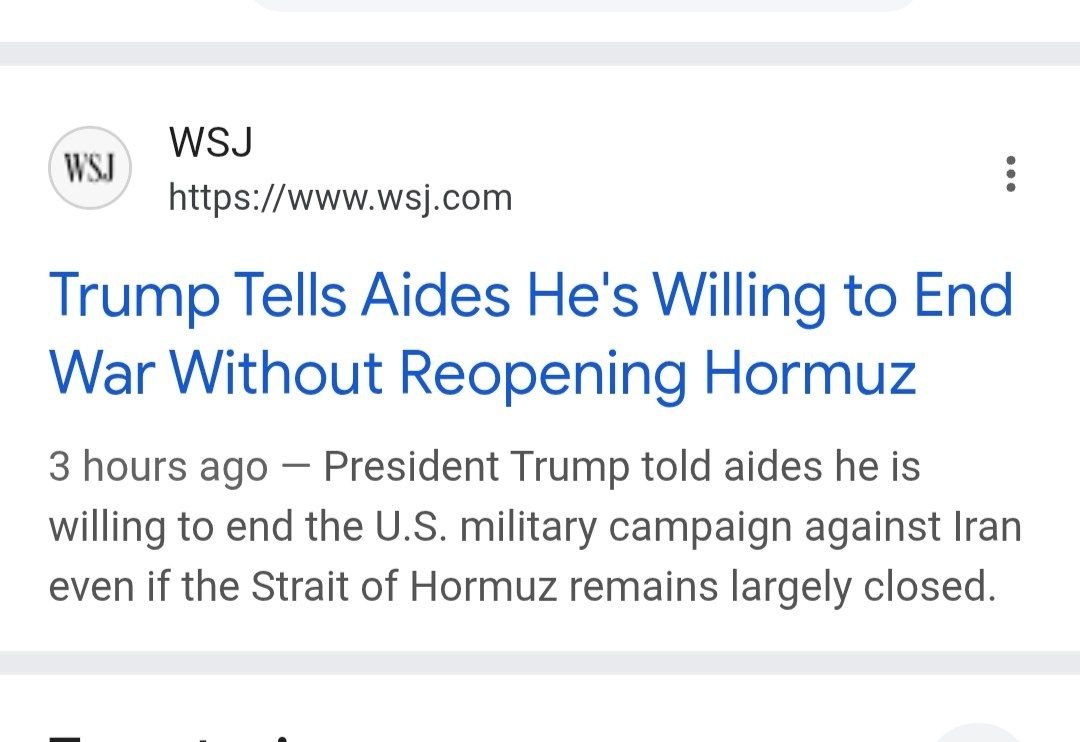
WASHINGTON — In a stunning strategic pivot that has sent shockwaves through global capitals, U.S. President Donald Trump has privately told aides he is willing to terminate the military campaign against Iran even if the Strait of Hormuz remains largely closed, according to multiple reports from The Wall Street Journal, Reuters, and The Economic Times .
The revelation, emerging just hours ago, represents a dramatic departure from previous U.S. policy and raises profound questions about American commitment to freedom of navigation in the world's most critical oil chokepoint.
The Strategic Reversal
According to the WSJ report published three hours ago, Trump's willingness to accept a closed Hormuz represents a fundamental shift in the administration's war aims. Where previous U.S. military doctrine prioritized securing international waterways as a core national interest, the President appears prepared to withdraw American forces without achieving that objective .
Reuters confirmed the development two hours ago, reporting that Trump "is willing to end the military campaign against Iran even if the Strait of Hormuz remains..." — with the full implications of that position still emerging .
Why the Sudden Shift?
The timing of this revelation is critical. With over 400 vessels currently queued for Iranian permission to transit Hormuz, and Tehran institutionalizing a yuan-based toll system that bypasses the dollar entirely, the economic pressure on global markets has reached breaking point. Brent crude has surged above 104 per barrel, and European allies have been forced to negotiate independently with Tehran for energy access .
Trump's position appears to reflect a calculated cost-benefit analysis:
- Military Costs: The U.S. has been conducting sustained air operations against Iranian nuclear and military facilities since hostilities began, with significant expenditure and risk to American personnel
- Strategic Fatigue: The President has previously stated that nations dependent on Gulf oil should "take the lead" in securing regional waterways, signaling a broader American retrenchment from Middle East security responsibilities
- Domestic Priorities: With midterm elections approaching, the administration may be seeking to extricate itself from a conflict with no clear exit strategy
Global Fallout: Allies Scramble
The implications of a U.S. withdrawal without Hormuz reopening are staggering. European nations, led by the United Kingdom, have convened emergency diplomatic sessions with approximately 40 countries—including France, Germany, Italy, Japan, and the UAE—to address the crisis. Notably, the U.S. was excluded from Thursday's virtual coalition meeting .
British Foreign Secretary Yvette Cooper minced no words: "Current conditions are unsustainable and price spikes are hitting households and businesses in every corner of the world" .
Iranian Foreign Minister Abbas Araghchi has responded with characteristic opportunism, telling international media: "We are ready to provide them with safe passage. All they need to do is contact us to discuss how this route will work" .
The Yuan Factor
Compounding the strategic crisis, Iran has successfully implemented a payment system demanding transit fees in Chinese yuan or cryptocurrency stablecoins, deliberately circumventing the SWIFT-dependent dollar clearing system. At least two vessels have already completed yuan-denominated payments .
This represents not merely a tactical revenue mechanism but a structural challenge to dollar hegemony in global energy markets. With the U.S. potentially withdrawing without securing Hormuz, Beijing emerges as the primary beneficiary—watching as its currency gains transactional foothold in the world's most important energy corridor without firing a shot.
What "Ending the War" Means
Critical questions remain unanswered:
- Nuclear Status: Will any cessation of hostilities include Iranian commitments on uranium enrichment, or will Tehran retain its advanced centrifuge infrastructure?
- Regional Security: What becomes of American allies Israel and Saudi Arabia if the U.S. withdraws while Iran maintains Hormuz control?
- Economic Access: How will Asian and European economies secure energy supplies if the primary global power abandons the field?
Iran's parliament has already approved legislation formalizing transit fees, with the IRGC operating what maritime intelligence firm Lloyd's List describes as a "de facto 'toll booth' regime" . Countries are assigned "friendliness rankings" that determine preferential rates, with oil tankers facing opening negotiations at approximately 1 per barrel .
The New Geopolitical Reality
Trump's reported position signals the potential end of an era. For decades, the U.S. Navy's Fifth Fleet guaranteed freedom of navigation in the Persian Gulf as a public good. That guarantee appears to be evaporating—not through military defeat, but through strategic choice.
With roughly 2,000 vessels trapped in the Persian Gulf and 20,000 seafarers stranded in an active war zone, the humanitarian and economic costs continue to mount . Yet the world's superpower appears prepared to step back, leaving regional powers, European allies, and commercial shipping operators to negotiate their passage with an emboldened Iran.
The Strait of Hormuz—through which one-fifth of global oil shipments pass—may soon operate not as an international waterway, but as a sovereign Iranian toll road, with passage fees payable in Chinese currency.
Civic Watch Media will continue monitoring this developing story as official confirmation emerges from the White House.
Civic Watch Media | Truth. Accountability. Public Interest.